
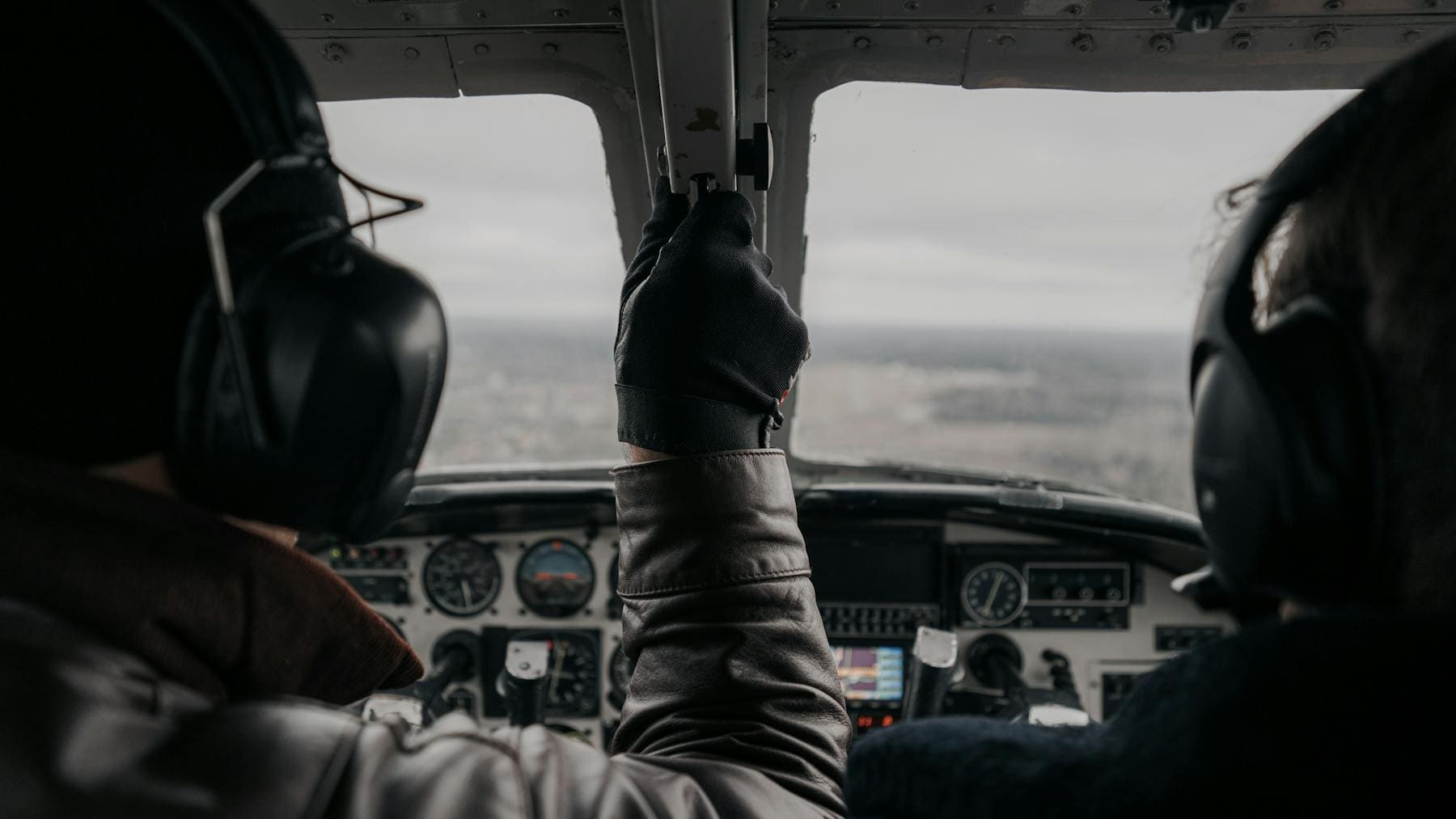
Almost no one steps straight from a private pilot certificate into an airline. The path is a ladder, and you climb it one rung at a time — earning ratings, then building the flight time that makes you hireable. It is a multi-year commitment measured in hours and consistency, not a single course. The encouraging part is that every rung is the same kind of flying you are already doing, just to a higher standard, and the whole climb can start right here at KFRG.
The certificate ladder at a glance
Every professional pilot follows roughly the same sequence, and each step builds directly on the one before it:
- Private Pilot (PPL). Your foundation — airmanship, navigation, ATC communication, and acting as pilot in command. Everything above this rung depends on it.
- Instrument Rating (IR). Flying by reference to instruments in cloud and low visibility. For a serious career this is not optional — it is what makes you an all-weather, hireable pilot.
- Commercial Pilot (CPL). Higher precision and advanced maneuvers to the standard an employer expects before paying you to fly. Under Part 61 this requires a minimum of 250 total flight hours.
- Certified Flight Instructor (CFI / CFII). Optional, but the most common way to keep flying — and get paid — while you build hours.
- Airline Transport Pilot (ATP). The top rung, generally requiring 1,500 hours, and the certificate the airlines hire against.
You do not enroll once and finish a finished airline pilot. You move up the ladder rating by rating, and the time between ratings is where the real planning happens.
Why most career pilots instruct to build hours
Once you hold a commercial certificate, you can be paid to fly — but you still need to close a large gap between roughly 250 hours and the 1,500 most airlines look for. The most common way pilots bridge that gap is by adding a flight instructor certificate and teaching. Instructing pays you to log flight time instead of buying it, and the hours add up steadily lesson after lesson. It also makes you a sharper pilot: nothing tightens your own understanding like teaching a student to land in a crosswind. Charter, banner-towing, aerial survey, and pipeline patrol are other time-building routes, but instructing remains the path most pilots take because it keeps them flying daily in familiar aircraft.
The 1,500-hour rule
The headline number for an airline career is 1,500. An FAA Airline Transport Pilot certificate — the certificate airlines require — generally calls for 1,500 hours of total flight time, along with specific cross-country, night, and instrument experience. There are restricted-ATP pathways that lower that threshold for certain backgrounds, such as graduates of approved degree programs or military-trained pilots, but for most students the planning number to hold in mind is 1,500. That figure is exactly why hour-building, and the instructing years that usually fill it, sits at the center of any honest career plan.
A realistic timeline and cost arc
At a steady two to three flights per week, a focused student can reach a commercial certificate in roughly 18 to 24 months. Reaching 1,500 hours for the ATP typically takes a year or more of instructing on top of that, so the full arc to an airline cockpit is measured in years, not months. The single biggest driver of your timeline is consistency — flying once a week stretches everything out, because skills decay between long gaps and lessons re-cover old ground.
Cost follows the same logic, because cost scales with hours and hours scale with consistency. It helps to budget per stage rather than as one intimidating lump: a private certificate, then instrument, then commercial, then the instructor add-on each carry their own range. We lay out the full per-certificate cost ranges, prerequisites, and timelines on the career programs page so you can plan the entire path instead of guessing one rung at a time. If you are starting from zero, our companion guide on how to become a commercial pilot on Long Island walks through the early stages in more detail.
Why starting at KFRG on Long Island helps
Republic Airport is a Class D controlled field from your very first lesson, sitting right on the edge of the New York Class B — one of the busiest, most complex airspace environments in the country. For someone aiming at a professional career, that is an advantage rather than an obstacle. You learn to talk to a live tower, manage real traffic, and operate in dense airspace from day one, instead of meeting those demands for the first time years into your training. Those are the habits a professional employer values, and building them early means they are second nature by the time it matters. You can read more about training in this environment on our Long Island flight school page.
Your first step
You do not need to commit to the whole ladder before you begin. The first step is simply to fly, see how it feels, and then map the certificates honestly against your timeline and budget. A discovery flight gives you the seat-of-the-pants answer, and a short planning conversation gives you the rest. From there the path is just one rung at a time.
New to flying entirely? Start with a discovery flight over Long Island → or read more about our Long Island flight school →