
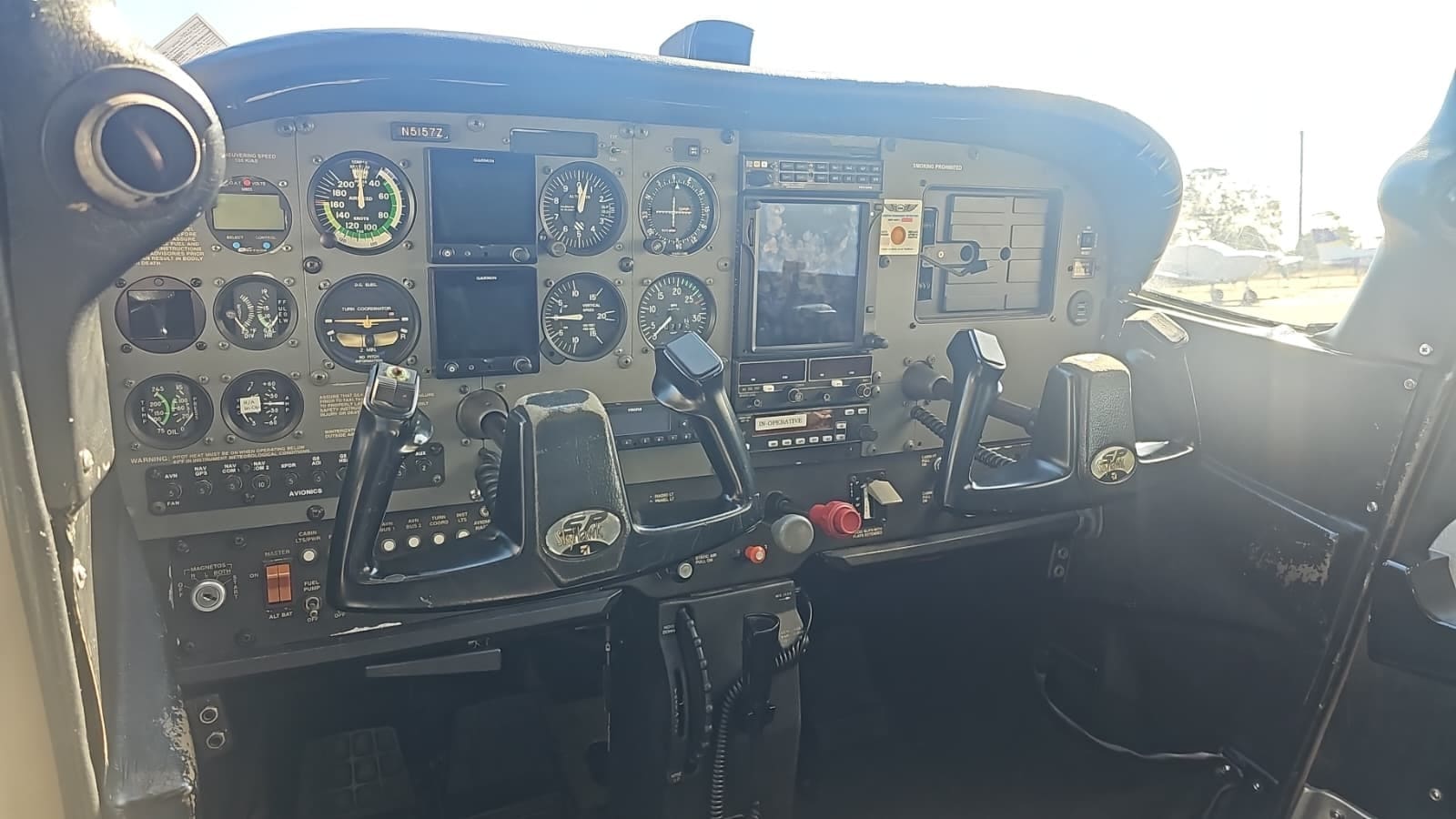
Most pilots earn their private certificate flying in clear weather, looking out the window, with the horizon doing most of the work. An instrument rating changes that. It is the training and the credential that let you fly when the view outside disappears — into a cloud layer, through reduced visibility, on a gray Long Island morning when the ceiling is low. If you fly anywhere near the Northeast for long enough, that weather will find you. The question is whether you are trained for it.
What an instrument rating actually is
An instrument rating is an add-on to your existing pilot certificate that qualifies you to fly under Instrument Flight Rules, or IFR. Under IFR, you operate by reference to your instruments rather than by looking at the ground and horizon, and you fly within the air traffic control system on a clearance the whole way. That means flying an assigned altitude and heading, intercepting and tracking courses, holding when asked, and flying a published approach down to a runway you may not see until the last few hundred feet. It is a different way of flying — methodical, procedure-driven, and built around trusting what the panel tells you even when your body is telling you something else. Learning to ignore those false sensations and believe the instruments is the core of the rating.
Why it matters — safety first
The first reason to earn an instrument rating has nothing to do with a career. It is the single largest safety margin most pilots ever add. The Northeast and Long Island get real weather: marine layers off the Sound, low ceilings, haze, and fronts that move through faster than a forecast can keep up. Without an instrument rating, a layer of cloud between you and home turns a planned flight into a scrubbed day, or worse, tempts a visual-only pilot into conditions they are not trained for. With the rating, that same morning becomes a manageable, planned IFR departure. You are not gambling on the weather clearing — you have the training and the legal footing to fly through it deliberately. For anyone who wants to actually use an aircraft to go places, that is the difference between a fair-weather hobby and dependable transportation.
Why it matters for a career
If you are flying toward a professional cockpit, the instrument rating is not optional — it is assumed. Nearly all professional flying happens under IFR, and employers expect an instrument-rated, instrument-current pilot as a baseline, not a bonus. It is also a prerequisite step on the path to the commercial certificate and beyond. Skipping it is not a real option for a career pilot, which is why most students fold it into their plan from the start rather than treating it as something to consider later. If a flying career is the goal, think of the instrument rating as the second rung on the ladder, right after the private certificate.
The prerequisites
To start working toward an instrument rating, you need to already hold at least a private pilot certificate — the rating builds directly on the airmanship and communication skills you developed there. Separately, the FAA requires 50 hours of cross-country flight time as pilot in command before the rating can be issued. That cross-country time is its own requirement, distinct from the instrument instruction itself, and it is worth planning for early. Many students build those hours in the months before and during their instrument training, so the flying does double duty — you are logging the cross-country experience while you sharpen the instrument skills you will be tested on. Going in aware of that 50-hour mark keeps it from becoming a surprise late in the process.
What the training covers
Instrument training is less about raw stick-and-rudder skill and more about procedure, precision, and decision-making. You will learn IFR procedures end to end: filing and flying a clearance, navigating by instruments, intercepting and holding courses, and flying approaches in real and simulated low-visibility conditions. A large part of the work is weather decision-making — reading conditions, understanding what your aircraft and your own currency can safely handle, and making the call to go, divert, or stay on the ground. At a steady pace of regular flying, most students complete the rating in roughly three to five months. The exact timeline and cost depend on how often you fly and how much of the 50-hour cross-country requirement you have already met, so we lay out the current ranges and prerequisites on the instrument rating program page rather than pinning a single number here.
Is it worth it for you
If you only ever plan to fly on clear, calm afternoons and never go far from home, you can stay current and safe on your private certificate alone. But almost everyone eventually wants more — to travel, to fly on a schedule, to not have a thin cloud layer dictate the day. And if a career is anywhere in the picture, the rating is simply part of the path. For most pilots on Long Island, the instrument rating is the most useful thing they add after the private certificate: it makes flying safer, more dependable, and far more capable. The honest answer for most people is yes, it is worth it — the only real question is timing.
Thinking bigger picture? Read how to become a commercial pilot on Long Island → or learn more about our Long Island flight school →